The State Committee of the Republic of Tatarstan on Procurement took part in public discussions of the Tatarstan Department of the Federal Antimonopoly Service
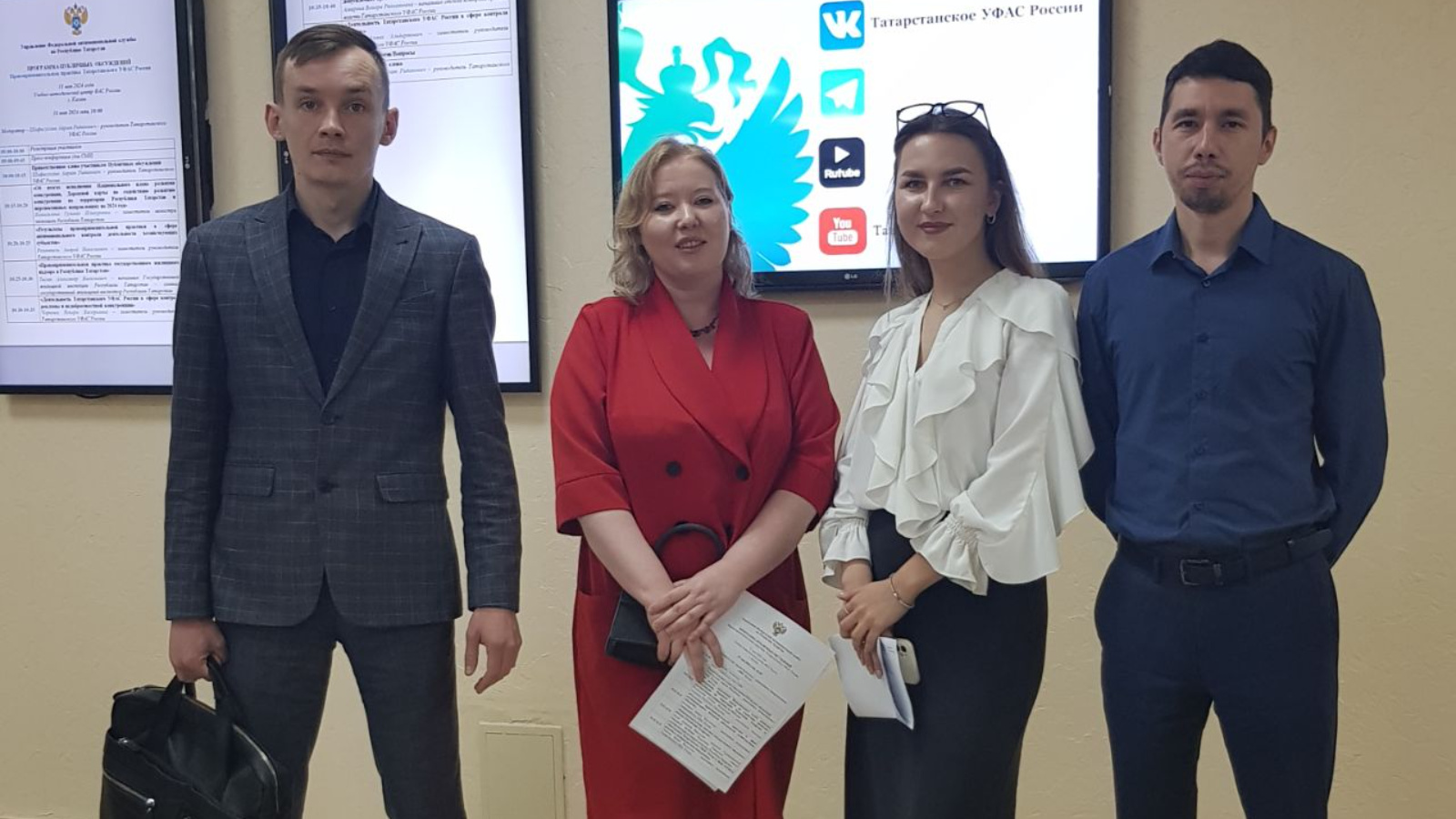
On May 31, public discussions of the control and supervisory activities of the Tatarstan Department of the Federal Antimonopoly Service of Russia took place in Kazan, where the practice in the field of state and municipal procurement, control of authorities, advertising and subjects of natural monopolies was presented.
During the discussions, the main violations committed by participants in state and municipal procurement were highlighted:
- discrepancies in the draft contract and the notification: different conditions for ensuring the execution of the contract, different deadlines for the completion of work / delivery of goods;
non-application of the national regime (prohibitions, restrictions, admission conditions);
- establishment of conformity of goods, works and services with invalid normative legal acts, indication of indicators not in accordance with GOST standards, without justification;
- not placing the design and estimate documentation in full;
- illegal requirements for procurement participants (experience, licenses, self-regulatory organizations, etc.);
- failure to establish additional requirements under the Decree of the Government of the Russian Federation dated 12/29/2021 No. 2571 on the availability of experience in the work performed.
An important aspect of the discussion was also the problems in the field of advertising and the activities of natural monopolies. These areas also require more careful monitoring and regulation in order to ensure fair conditions for all market participants and protect the interests of consumers. Suggestions were made to improve the regulatory framework and control mechanisms to prevent possible violations in the future.
Such events are an important step in improving the practice of public procurement and control over the activities of government authorities. They help to increase the transparency and efficiency of procurement processes, as well as identify and eliminate possible violations. Employees of the State Procurement Committee of the Republic of Tatarstan took part in public discussions and took note of their results in order to work on improving the procurement process.